
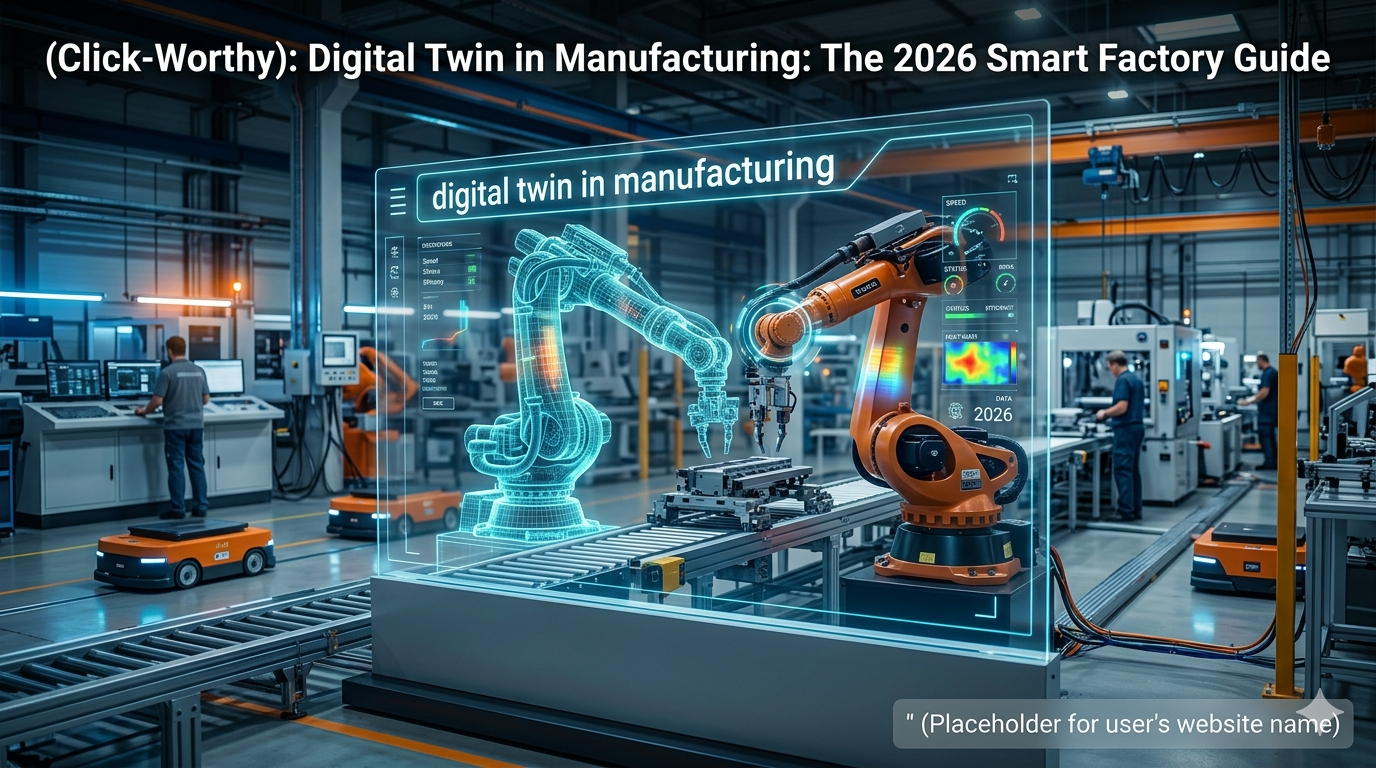
Imagine having a magic mirror for your factory. This mirror doesn’t just show what is happening right now; it shows what might happen tomorrow, next week, or even next year. In the world of modern industry, this isn’t magic—it is called a digital twin in manufacturing.
Whether you are a business owner or just curious about cool tech, understanding how virtual replicas are changing the way we make things is essential. From saving money to stopping machines from breaking, digital twins are the “secret sauce” of the 2026 smart factory. Let’s dive into how this technology works and why it matters to you.
What Exactly is a Digital Twin in Manufacturing?
A digital twin is much more than just a 3D drawing on a computer. Think of it as a living, breathing digital version of a real machine. It is connected to the physical object by tiny sensors. These sensors send data back and forth in real-time.
When the real machine gets hot, the digital twin shows that heat. When the real machine slows down, the digital twin knows why. This constant connection allows engineers to watch their factory from anywhere in the world. It’s like having a “Save Game” point in a video game—you can try different things in the digital world without breaking anything in the real one.
How Real-Time Data Bridges the Gap
The heart of a digital twin in manufacturing is data. Without data, the twin is just a static picture. In 2026, factories use “Edge Computing” to process information right on the shop floor. This means the digital twin reacts instantly.
If a robotic arm starts to vibrate slightly differently, the twin detects it. This is called “anomaly detection.” Instead of waiting for the arm to snap, the system alerts a human worker. This bridge between the physical and digital worlds ensures that the factory always runs at its best.
Predictive Maintenance: Fixing Things Before They Break
We have all had a car break down at the worst time. In a factory, a broken machine can cost thousands of dollars every minute. This is where predictive maintenance comes in.
Using the digital twin, the system can “see” into the future. It analyzes wear and tear patterns. It might say, “Hey, this belt is going to snap in three days.” This allows the team to fix it during a lunch break instead of stopping the whole line during a busy shift. It’s a total game-changer for efficiency.
Designing Better Products with Virtual Prototypes
Before a company makes a new car or a new toy, they use a digital twin to test it. This is called virtual prototyping. Instead of building ten physical models (which is expensive and slow), they build one digital version.
They can “crash” the digital car or “drop” the digital phone thousands of times. This helps find mistakes early. By the time the real product is made, it is already perfected. This saves a lot of material and helps get products to stores much faster.
Optimizing the Factory Layout
Have you ever tried to move furniture in your room and realized it didn’t fit? Now imagine moving a 10-ton machine! Digital twins allow managers to move things around virtually.
They can simulate the flow of workers and materials. If the twin shows that a certain layout causes a “bottleneck” (a traffic jam for parts), they can change it with a click. Companies like BMW already use this to make their factories more organized and spacious.
Boosting Energy Efficiency and Sustainability
Being “green” is very important today. A digital twin in manufacturing helps track exactly how much electricity and water a factory uses.
By watching the twin, managers can see which machines are wasting power. They can simulate “what-if” scenarios to find the most eco-friendly way to run the plant. This doesn’t just help the planet; it also lowers the electricity bill, which is a win for everyone.
Improving Worker Safety with Simulations
Safety is the number one priority on any shop floor. Digital twins help keep humans out of harm’s way. Managers can use the twin to simulate dangerous tasks before a human ever tries them.
For example, if a worker needs to fix a high-voltage part, they can practice in a virtual reality (VR) environment linked to the digital twin. This way, they know exactly what to do and what risks to look out for. It makes the workplace much smarter and safer.
Training the Next Generation of Makers
Learning to use a complex machine is hard. But with a digital twin, new workers can train in a safe, digital space. It’s like a flight simulator for factory workers.
They can press buttons, make mistakes, and learn the “feel” of the machine without any risk. This speeds up training and makes sure everyone is an expert before they touch the real equipment. In 2026, “Workforce Transformation” is a big part of how companies stay successful.
Real-World Success: Companies Leading the Way
Many big names are already winning with this tech. Tesla uses digital twins for every car they make to track its health. BMW has created entire “Virtual Factories” to plan production years in advance. Even companies that make food, like the Bel Group (they make Babybel cheese!), use twins to ensure their proteins stay high-quality and consistent. These aren’t just ideas; they are real tools helping people every day.
The Future of the Manufacturing Digital Twin
Looking ahead, digital twins will become even more common. As AI gets smarter, the twins will start making their own suggestions. Instead of just showing a problem, the twin might say, “I have already adjusted the speed to keep the machine safe.”
We are moving toward a world where the physical and digital are perfectly in sync. For anyone in the industry, staying updated on the digital twin in manufacturing is the best way to be ready for the future of work.
Conclusion
The digital twin in manufacturing is more than a trend—it is a vital tool for the modern world. It helps us make better products, keep workers safe, and protect our environment. By blending real-time data with clever simulations, we can solve problems before they even exist.
Are you ready to see how a digital twin might change your favorite products? The next time you hold a high-tech gadget, remember: it probably has a digital “brother” living in a computer somewhere, making sure it’s the best it can be!
FAQs
1. Is a digital twin just a 3D model?
No! A 3D model is just a picture. A digital twin is “alive” because it uses real-time data from sensors to change and react just like the real object.
2. Does a factory need to be “smart” to use a digital twin?
Yes, usually. The factory needs sensors and a good internet connection (IoT) so the physical machine can “talk” to its digital twin.
3. Will digital twins replace human workers?
Actually, they help humans! They make the job safer, provide better training, and take away the boring task of constant manual checking.
4. How much does it cost to set up?
It can be expensive at first because of the software and sensors. However, most companies find that they save much more money by preventing breakdowns and waste.
5. Can a digital twin help with small businesses?
Yes. While big factories used them first, “no-code” platforms are making it easier for smaller shops to start using simple digital twins to track their tools.
6. Is the data safe from hackers?
Cybersecurity is a big focus in 2026. Companies use special “Sovereign Clouds” and encryption to make sure their factory data stays private and protected.
References:
- Sentient Concepts (2026) – Future Digital Twin Applications.
- StartUs Insights (2026) – Digital Twin Market Trends and Data.
- NVIDIA Blog (2026) – Industrial AI and the Omniverse.
- Zetwerk Knowledge Base – The Role of Digital Twins in Optimization.